

Cusco City Tour: Main Sites, Tickets, Timing and What to Expect
- Machupicchu Inka Travel Agency
Cusco is a city where different periods of Peruvian history are visible almost on top of one another. Inca stone walls still form part of streets and buildings in the historic center, colonial churches rise above earlier sacred spaces, and several major archaeological sites sit only a few kilometers beyond the Plaza de Armas.
A Cusco City Tour is one of the simplest ways to connect these places in a single half-day experience. The classic route usually combines Qorikancha in the historic center with Sacsayhuaman, Qenqo, Puka Pukara and Tambomachay, four archaeological sites located in the hills above Cusco. Some operators also include the Cusco Cathedral or additional stops, so the exact itinerary is not identical everywhere. Current half-day programs generally take around four to five and a half hours.
This Cusco City tour guide explains what you will actually see, which entrance ticket you need, how much time to allow, whether morning or afternoon is better, and whether it makes more sense to join a tour or explore independently.
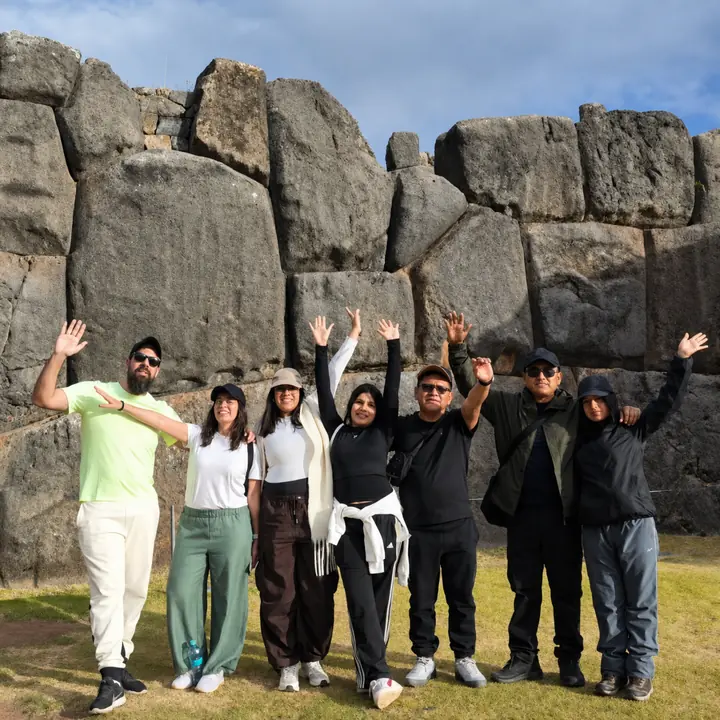
Table of Contents
- What Is the Cusco City Tour?
- What Sites Do You Visit on a Cusco City Tour?
- Which Cusco Tourist Ticket Do You Need?
- How Long Does the Cusco City Tour Take?
- Morning or Afternoon: Which Is Better?
- What Should You Expect Physically?
- Is the Cusco City Tour Good for Your First Day?
- Can You Visit the Sites Without a Tour?
- Common Mistakes When Planning a Cusco City Tour
- What Should You Bring?
- Frequently Asked Questions About the Cusco City Tour
- Final Thoughts: Is the Cusco City Tour Right for You?
What Is the Cusco City Tour?
Despite the name, the classic Cusco City Tour is not limited to the streets of downtown Cusco.
The experience typically begins in or near the historic center and then travels north toward the archaeological zone surrounding Sacsayhuaman. This makes the tour a combination of urban history, Inca architecture and archaeological sites rather than a conventional sightseeing bus tour.
A commonly used itinerary is:
Qorikancha → Sacsayhuaman → Qenqo → Puka Pukara → Tambomachay → Cusco
The first stop introduces the religious and architectural importance of the Inca capital, while the sites outside the city reveal how the surrounding landscape was integrated into ceremonial, administrative and political life.
Peru’s official tourism portal also distinguishes between walking visits within the historic center and excursions that continue toward Sacsayhuaman and other sites outside central Cusco.
One important point is that there is no universal City Tour itinerary. Some versions include Qorikancha but not the Cathedral. Others include both. Private tours may add Cristo Blanco, San Blas or other viewpoints, while shorter services sometimes concentrate almost entirely on the four archaeological sites.
For that reason, always check the actual itinerary rather than assuming that every tour called “Cusco City Tour” includes the same attractions.
What Sites Do You Visit on a Cusco City Tour?
Qorikancha: The Temple of the Sun
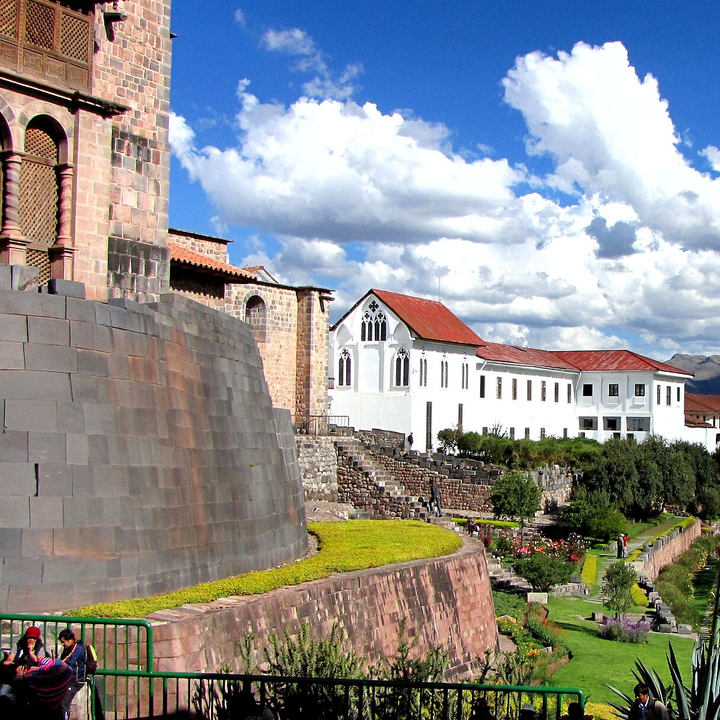
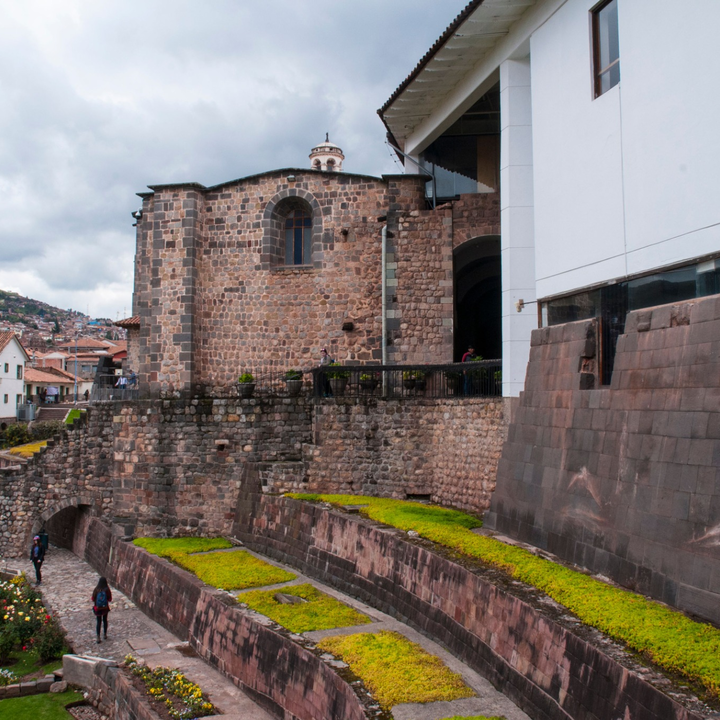
Qorikancha is one of the best places to begin understanding Inca Cusco because it shows two historical periods within the same complex.
Its name comes from Quechua words generally translated as “gold enclosure.” During the Inca period, Qorikancha was the empire’s principal religious sanctuary and was particularly associated with Inti, the Sun. The official Peruvian tourism inventory describes it as a major religious, ceremonial and political center developed prominently during the reign of Pachacutec.
After the Spanish conquest, the Santo Domingo church and convent were constructed over and around the Inca complex. Today, finely fitted Inca masonry survives alongside colonial architecture, making the site one of Cusco’s clearest examples of how the city changed after the sixteenth century.
Pay attention to the stonework rather than rushing through the rooms. The walls are slightly inclined, the blocks fit together with remarkable precision, and the surviving architecture illustrates a completely different construction system from the colonial structures above it.
There is also an important ticket distinction that confuses many visitors: Qorikancha itself and the Museo de Sitio Qorikancha are not the same attraction. The Cusco Tourist Ticket includes the Museo de Sitio Qorikancha under Circuit II, but not the main Qorikancha temple visit used on most City Tours.
Sacsayhuaman: Monumental Inca Architecture Above Cusco
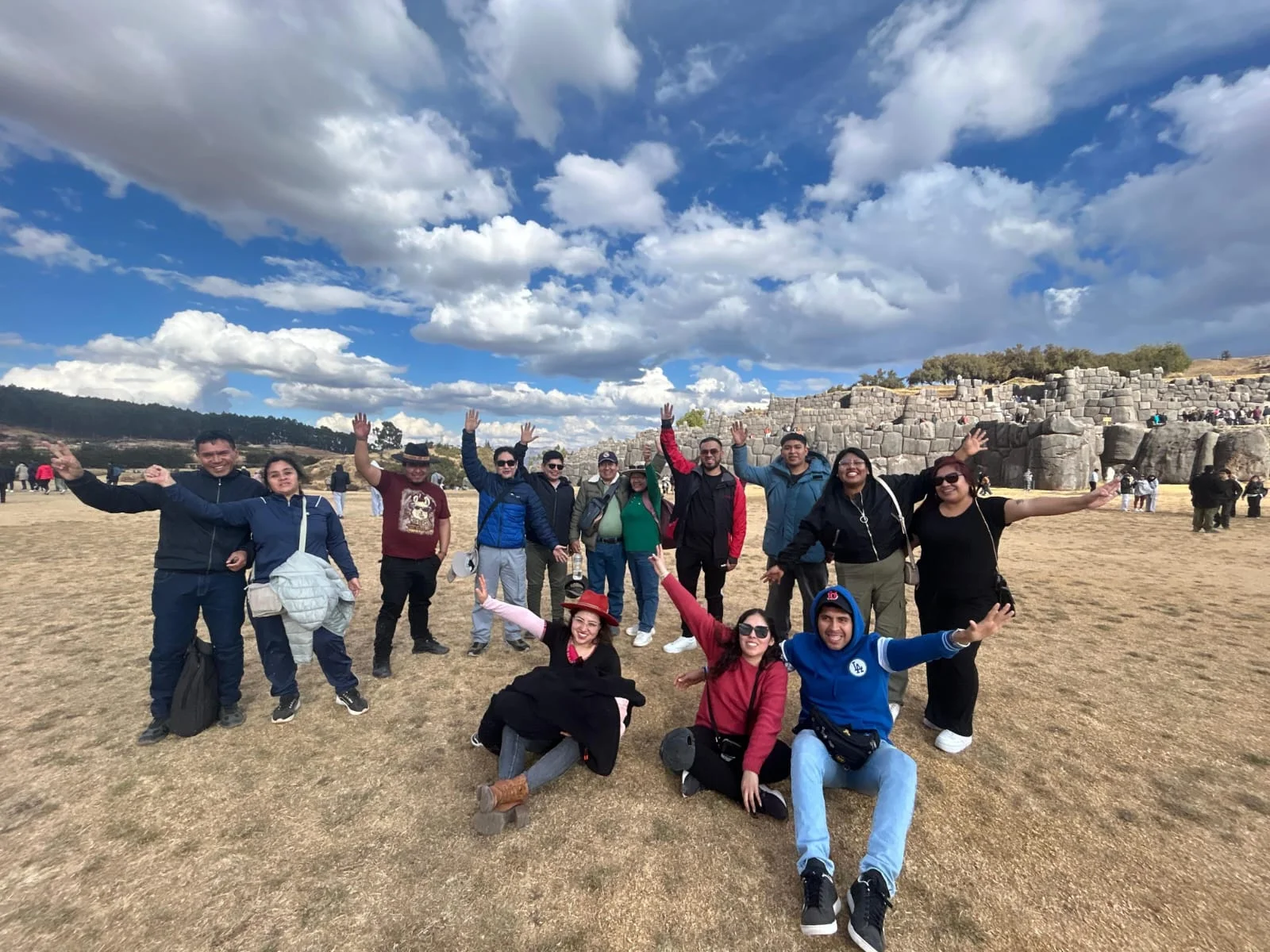
fter leaving the historic center, Sacsayhuaman is normally the major archaeological stop of the tour.
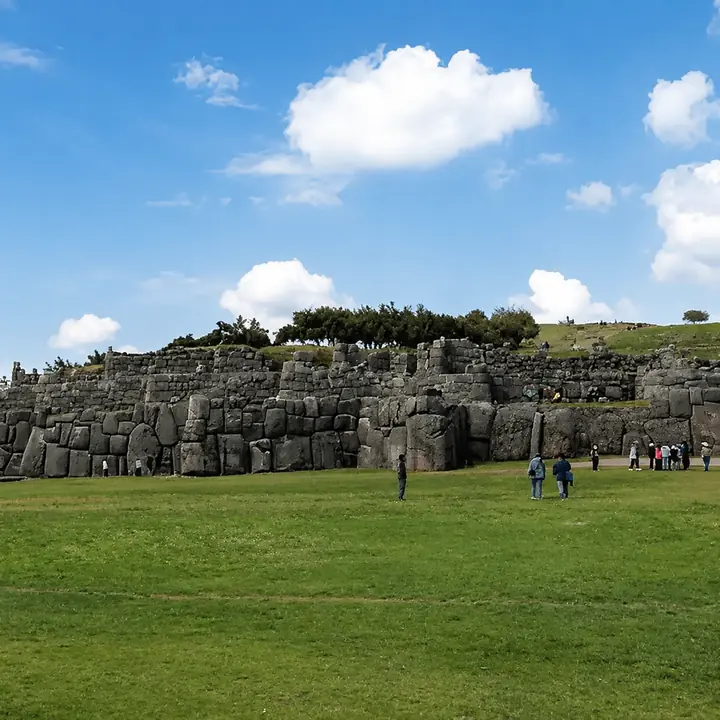
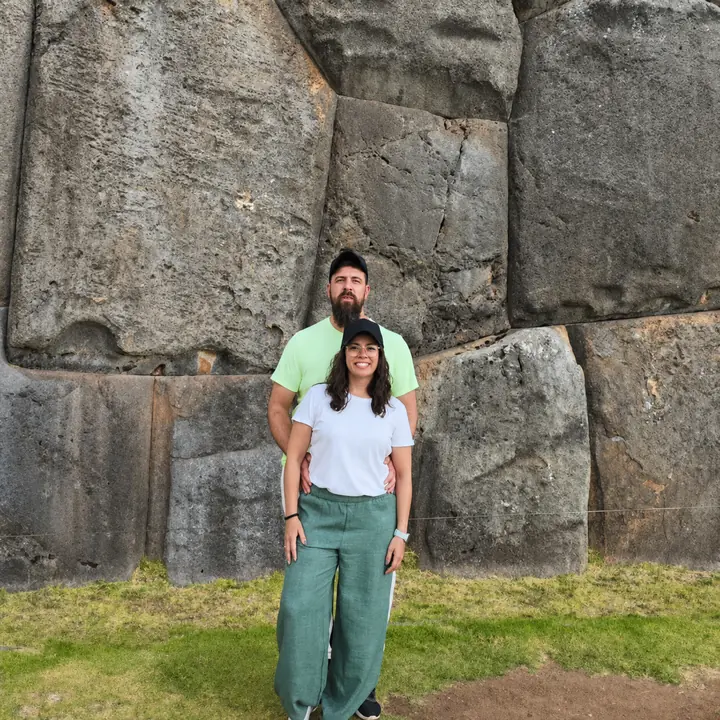
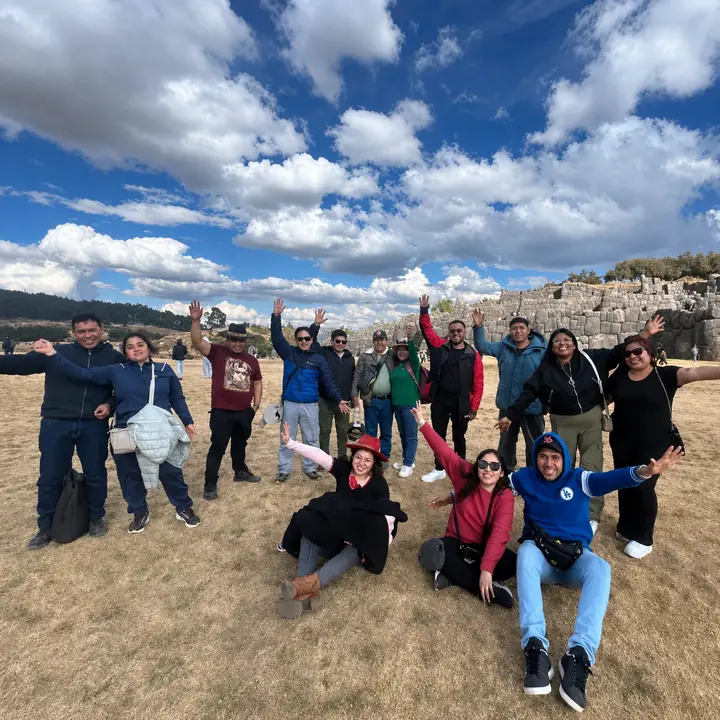
The site stands north of central Cusco at approximately 3,700 meters above sea level and contains some of the most extraordinary examples of large-scale Inca stonework. MINCETUR’s official tourism inventory records individual blocks exceeding eight meters in height and estimates that some weigh more than 100 tonnes.
Sacsayhuaman is commonly described as an Inca fortress, but that description alone does not capture its significance. The Dirección Desconcentrada de Cultura Cusco identifies it as one of the most important places associated with the Inca capital and describes it as the “House of the Sun of Hanan Qosqo.” Construction on the monumental complex expanded during the government of Pachacutec and continued under later Inca rulers.
Its most recognizable feature is the series of enormous zigzagging walls constructed from irregular stone blocks fitted together without mortar.
The scale becomes much more impressive when you stand beside them. Photographs often flatten the walls and make the stones look smaller than they actually are.
Sacsayhuaman also offers wide views over modern Cusco, helping visitors understand how closely the archaeological complex is connected to the former Inca capital below.
The archaeological park currently receives visitors from 7:00 a.m. to 5:30 p.m., according to the regional Culture authority.
Qenqo: A Ceremonial Landscape Carved into Rock
Qenqo feels very different from Sacsayhuaman.
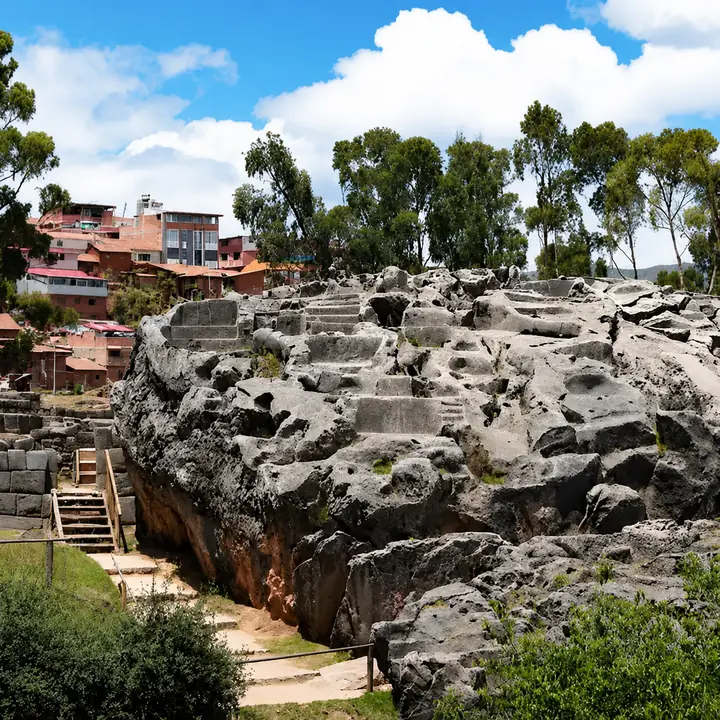
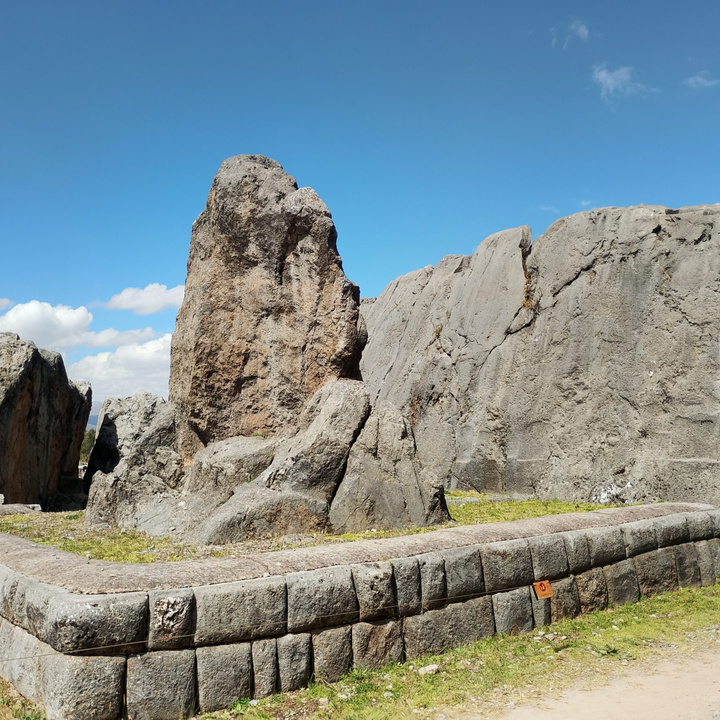
Rather than impressing through enormous walls, the site is centered around a natural limestone formation that was extensively carved and adapted by Inca stoneworkers.
The name derives from the Quechua q’inqu, commonly interpreted as “labyrinth” or a twisting path. The archaeological site lies roughly four kilometers northeast of the historic center at about 3,580 meters above sea level.
Visitors can see carved channels, niches, worked rock surfaces and a narrow interior chamber.
Qenqo is frequently associated with ceremonial and funerary activities, but some specific interpretations of its carvings remain uncertain. Claims that particular channels definitely carried blood, chicha or other ritual liquids should therefore be treated as interpretations rather than proven facts.
This is one of the places where having historical context makes the biggest difference. Without explanation, Qenqo can appear to be little more than an unusual rock formation. Once you begin looking at how the natural stone was intentionally reshaped, the site becomes much easier to understand.
Puka Pukara: A Strategic Stop on the Road Outside Cusco
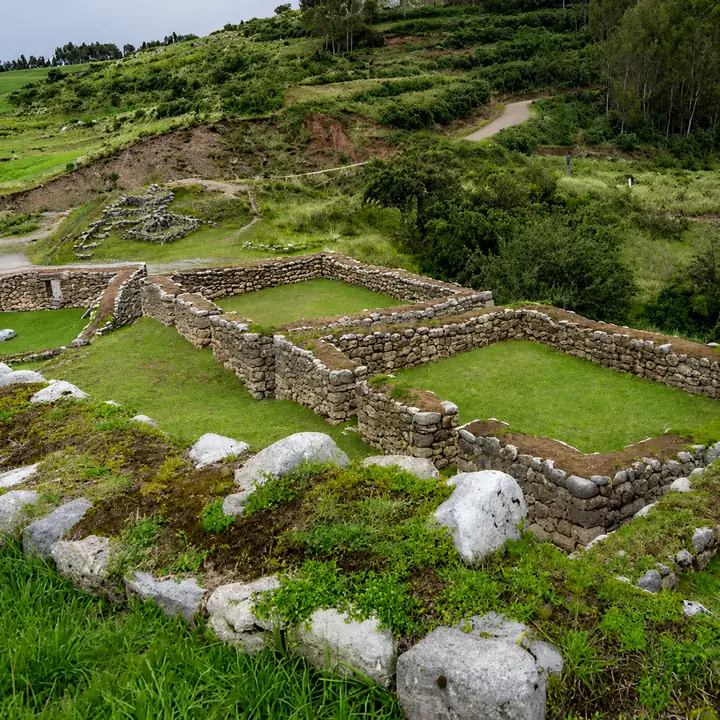
Puka Pukara is smaller and usually requires less time than Sacsayhuaman, but its location is part of what makes it interesting.
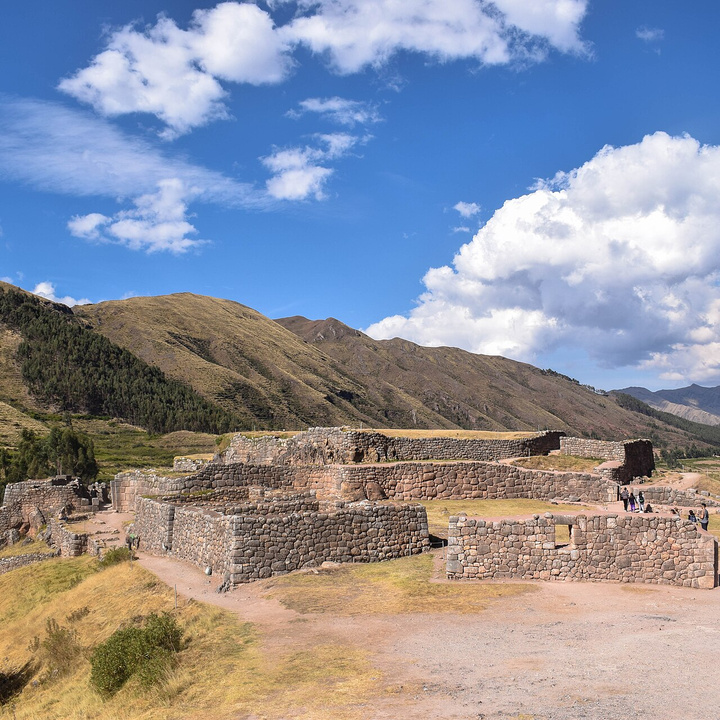
The complex occupies elevated terrain along one of the routes approaching Cusco and contains terraces, enclosed spaces, paths and other built structures.
PROMPERÚ describes Puka Pukara as a complex with plazas, aqueducts, watch areas and rooms that likely served as a tambo, or stopping place, associated with the movement of the Inca and his entourage toward nearby Tambomachay.
It is often called the “Red Fortress,” although its exact historical function is still discussed. It may have combined administrative, lodging, control and defensive roles rather than functioning exclusively as a military fortress.
Because the visit is relatively short, travelers sometimes dismiss Puka Pukara compared with Sacsayhuaman. It becomes more meaningful when understood as part of a network of roads, ceremonial sites and controlled approaches surrounding the Inca capital.
Tambomachay: Water and Inca Engineering
Tambomachay usually forms the final archaeological stop before returning to Cusco.
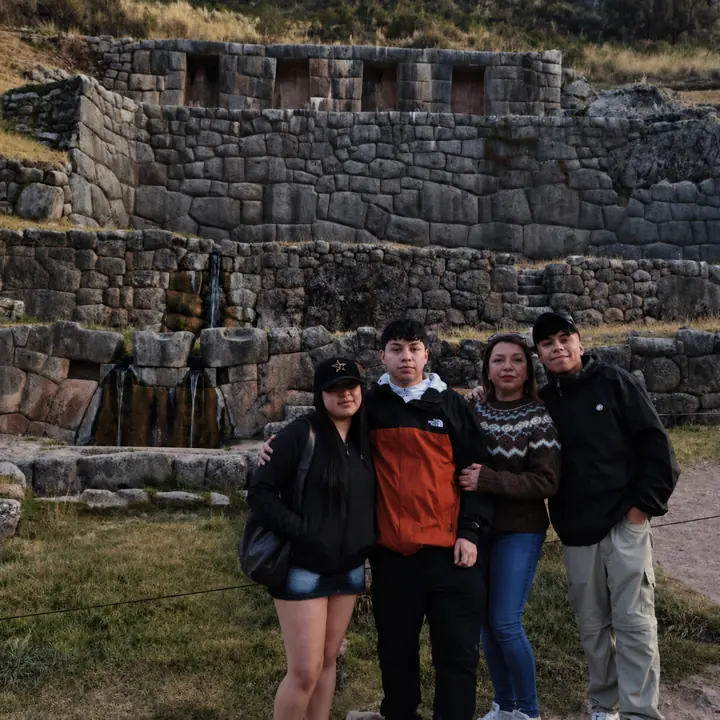
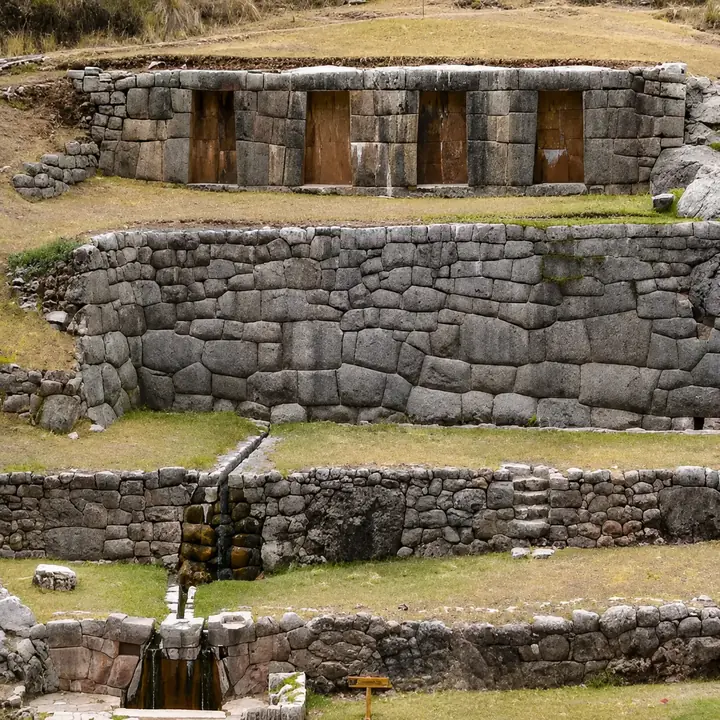
At first glance, the site appears modest: carefully constructed stone terraces contain channels through which water continues to flow.
But that is precisely what makes it significant.
PROMPERÚ describes Tambomachay as a religious center associated with water, where rituals were connected with water abundance and regeneration of the land. The complex demonstrates how Inca builders incorporated springs, channels and stone architecture into a carefully organized ceremonial environment.
Rather than focusing only on the fountains, look at the entire design: the symmetry of the masonry, the positioning of the channels and the way the construction follows the natural slope.
Tambomachay lies roughly seven to eight kilometers from central Cusco and sits close to 3,700 meters above sea level, making it one of the higher points reached on the classic route.
Which Cusco Tourist Ticket Do You Need?
This is one of the most important practical details of the City Tour.
Sacsayhuaman, Qenqo, Puka Pukara and Tambomachay are all included in Circuit I of the Boleto Turístico del Cusco, administered by COSITUC.
For foreign adult visitors, the current official options are:
| Ticket | Price | Validity | Best For |
|---|---|---|---|
| Partial Tourist Ticket – Circuit I | S/70 | 1 Day | Sacsayhuaman, Qenqo, Puka Pukara and Tambomachay |
| Integral Cusco Tourist Ticket | S/130 | 10 Days | Travelers visiting additional archaeological sites and museums around Cusco and the Sacred Valley |
Prices shown are the current adult foreign visitor rates published by COSITUC and may change. Always verify the current official rate before your visit.
COSITUC currently lists the Integral Ticket as covering 16 attractions across its three circuits. The Partial Circuit I ticket is enough if your only planned Boleto Turístico attractions are the four archaeological sites of the City Tour.
However, if you are also planning places such as Pisac, Ollantaytambo, Chinchero, Moray, Tipón or Pikillaqta, the Integral Ticket can make more sense because those attractions belong to other BTC circuits.
COSITUC currently states that the Boleto Turístico cannot be purchased online. It can be purchased at the central counter at Av. El Sol 103 and at many of the attractions included in the ticket. COSITUC also recommends buying it when you begin your visits because the validity period begins from the date of purchase.
The BTC is an entrance ticket only. It does not include transportation or a guide.
Does the Boleto Turístico include Qorikancha and the Cathedral?
Not the main attractions normally meant by those names.
The Integral BTC includes the Museo de Sitio Qorikancha, but the main Qorikancha temple complex requires separate admission. Likewise, the Cathedral is not one of the attractions listed on the Cusco Tourist Ticket.
This distinction matters when comparing City Tour prices. A cheap tour may cover transportation and guiding while leaving all entrance fees to the traveler.
How Long Does the Cusco City Tour Take?
A realistic estimate is around four to five and a half hours.
The exact duration depends on whether the itinerary includes Qorikancha, the Cathedral or additional city-center stops, as well as traffic, group size and the time spent at Sacsayhuaman.
Current Cusco operators advertise programs ranging from approximately four hours to more than five hours, while itineraries that include more historic-center visits commonly take closer to five hours.
You should therefore think of the City Tour as a half-day activity, not something to squeeze between two tightly scheduled reservations.
A typical sequence involves walking through each attraction, returning to the vehicle, driving a short distance to the next site and repeating the process.
There is no serious trekking involved, but you will repeatedly walk on stone, grass, stairs and uneven archaeological terrain.
Morning or Afternoon: Which Is Better?
Neither schedule is automatically better for every traveler.
A morning City Tour works well if you like starting early and want the rest of your afternoon free for lunch, museums, San Blas or simply resting in Cusco.
An afternoon tour can be convenient if you already have plans during the morning or prefer a slower start. Afternoon departures are also very common among group tours in Cusco.
Current Machupicchu Inka operations, for example, offer both morning and afternoon departures, with the morning service beginning around 9:00 a.m. and the afternoon service around 1:00 p.m. The complete experience lasts roughly five hours.
Rather than choosing solely by the time of day, consider how the City Tour fits with the rest of your itinerary.
If you have just arrived in Cusco after a long overnight journey or an early flight, automatically booking an afternoon tour may not be the best decision if you are tired or experiencing altitude symptoms.
What Should You Expect Physically?
The Cusco City Tour is considerably less demanding than activities such as Rainbow Mountain, Humantay Lake or a multi-day trek.
But “easy” should not be confused with “low altitude.”
Central Cusco sits at roughly 3,335–3,400 meters, while parts of the archaeological circuit reach around 3,700 meters.
Most of the walking is broken into short sections because transportation connects the major sites. However, travelers should still expect uneven surfaces, stone steps, exposed archaeological areas and periods standing while the guide explains each location.
Move at a comfortable pace, especially if you have recently arrived from sea level.
You do not need trekking equipment, but comfortable walking shoes are much more appropriate than sandals or formal footwear.
Is the Cusco City Tour Good for Your First Day?
It can be — but this deserves more nuance than the usual claim that a City Tour automatically “helps you acclimatize.”
The itinerary involves relatively short walks and regular transportation, so it is physically much gentler than a high-altitude hike. This is one reason many travelers schedule it near the beginning of their stay.
However, the tour also travels higher than central Cusco, reaching archaeological sites around 3,700 meters.
If you arrive feeling well and prefer a light cultural activity rather than staying inside your hotel all day, the City Tour can fit naturally into your first or second day.
If you are already experiencing headache, nausea, unusual fatigue, dizziness or significant discomfort after arriving in Cusco, forcing yourself through several hours of sightseeing simply because the tour is classified as “easy” is not a good idea.
Your first priority should be how you actually feel.
Can You Visit the Sites Without a Tour?
Yes.
None of these sites requires you to join an organized City Tour simply to enter.
Independent travelers can buy the appropriate Boleto Turístico, visit Qorikancha separately and arrange taxis, private transportation or a combination of walking and local transport.
Sacsayhuaman is only a few kilometers from central Cusco and is connected with the historic city by traditional pedestrian approaches. The archaeological road continues toward Qenqo, Puka Pukara and Tambomachay.
However, covering the entire classic route on foot is a very different experience from joining a half-day vehicle tour. Puka Pukara and Tambomachay are several kilometers beyond central Cusco and sit at higher altitude.
For most visitors, the decision comes down to what matters more.
Going independently offers maximum flexibility and lets you spend as much time as you want at each place. A group tour is generally the simplest way to organize transportation at a lower cost. A private guide and vehicle give you more control over timing while retaining historical interpretation.
The value of guiding is especially noticeable at Qenqo and Puka Pukara, where the archaeological remains are not always self-explanatory.
Common Mistakes When Planning a Cusco City Tour
One of the most frequent mistakes is buying the wrong Tourist Ticket. If you only need the four archaeological sites around Cusco, Circuit I may be enough; if the Sacred Valley and other BTC attractions are also in your itinerary, calculate whether the Integral Ticket makes more sense.
Another is assuming that Qorikancha, Museo de Sitio Qorikancha and the Cathedral are automatically covered by the same ticket. They are not.
Travelers also sometimes underestimate the altitude because the City Tour is marketed as an easy excursion. The walking itself may be light, but Sacsayhuaman, Puka Pukara and Tambomachay are higher than the historic center.
Finally, do not assume that every “Cusco City Tour” has the same itinerary. Before booking, check the actual attractions, whether entrance tickets are included, the meeting or pickup point, departure time, language of the guide and approximate return time.
What Should You Bring?
You do not need a trekking backpack for this tour. A small daypack is normally enough.
Bring comfortable walking shoes, drinking water, sun protection, a light layer or jacket, your identification document and some local currency for tickets or personal expenses. Peru’s official tourism portal similarly recommends essentials such as sunscreen, cash, a camera and a small backpack for sightseeing in Cusco.
Cusco weather can change quickly, so dressing in layers is generally more comfortable than relying on one heavy garment.
And although photography is allowed for normal visitor use in the archaeological areas, the Culture authority prohibits climbing on archaeological walls and restricts drones and commercial photography without authorization.
Frequently Asked Questions About the Cusco City Tour
Still have questions before exploring Cusco? These are some of the most common things travelers want to know about the City Tour, tickets and archaeological sites.
Is the Cusco City Tour worth doing?
For first-time visitors interested in Inca history, the Cusco City Tour is an efficient introduction to several important archaeological sites in just half a day. Sacsayhuaman is the largest stop, while Qenqo, Puka Pukara and Tambomachay reveal different aspects of Inca architecture, ceremonial practices and engineering.
How long does the Cusco City Tour take?
Most Cusco City Tour itineraries take approximately four to five and a half hours. The exact duration depends on the attractions included, traffic, group size and how much time is spent at each archaeological site.
Which sites are included in the classic Cusco City Tour?
The classic archaeological route normally visits Sacsayhuaman, Qenqo, Puka Pukara and Tambomachay. Many tours also include Qorikancha in the historic center, while some itineraries may additionally include the Cusco Cathedral or other city landmarks.
Do I need the Cusco Tourist Ticket?
Yes. Entry to Sacsayhuaman, Qenqo, Puka Pukara and Tambomachay is covered by Circuit I of the Cusco Tourist Ticket. Foreign adult visitors can currently purchase the Partial Circuit I ticket for S/70 or use the Integral Tourist Ticket if they plan to visit additional included attractions.
Is Qorikancha included in the Cusco Tourist Ticket?
No. The main Qorikancha temple complex requires separate admission. The Cusco Tourist Ticket includes the Museo de Sitio Qorikancha under another circuit, but this is a different attraction from the main Qorikancha and Santo Domingo complex visited on most City Tours.
Can I buy the Cusco Tourist Ticket online?
COSITUC currently states that the Cusco Tourist Ticket is purchased in person rather than through an official online sales platform. It is available from authorized sales points and at many of the attractions included in the ticket.
Can I visit Sacsayhuaman and the other sites without a tour?
Yes. You can visit the archaeological sites independently as long as you have the required Tourist Ticket. The main difference is that you will need to organize transportation yourself and will not have a guide providing historical and archaeological explanations.
Is the Cusco City Tour difficult?
The tour is not considered physically demanding because transportation connects the main sites. However, visitors should expect short walks over stone paths, stairs and uneven archaeological terrain at elevations reaching approximately 3,700 meters above sea level.
Is morning or afternoon better for the Cusco City Tour?
Both schedules can work well. A morning departure leaves your afternoon free, while an afternoon tour can be convenient for travelers with plans earlier in the day. The best option depends on your itinerary, weather conditions and how you feel at Cusco’s altitude.
Final Thoughts: Is the Cusco City Tour Right for You?
The value of the Cusco City Tour is not simply that it lets you “see five attractions in one afternoon.”
Its real advantage is that these places make more sense when experienced together.
Qorikancha introduces the religious and political center of Inca Cusco. Sacsayhuaman reveals monumental construction on an entirely different scale. Qenqo shows how natural rock could become part of a ceremonial landscape. Puka Pukara helps explain movement and control beyond the capital, while Tambomachay brings water and hydraulic engineering into the story.
Together, they provide context that becomes useful later when visiting the Sacred Valley and Machu Picchu.
You can explore them independently, with a group or privately. The right choice depends on how much flexibility, transportation and historical explanation you want.
Prefer to Visit With Transportation and a Local Guide?
If you would rather have the main logistics organized in advance, you can also explore the current Machupicchu Inka Cusco City Tour itinerary. Our half-day service visits Qorikancha, Sacsayhuaman, Qenqo, Puka Pukara and Tambomachay with tourist transportation and professional guiding, with morning and afternoon departures currently available.
Continue Exploring Cusco


Need Help Planning Your Trip?
Our local travel experts are here to help you plan the perfect trip to Peru.